
Records Behind Albany Resident Lookup
No single public roll proves that a named person lives at an Albany address right now. Each source answers a narrower question instead. The Dougherty County parcel roll names an assessed owner. It also keeps the tax mailing address separate from the physical situs address. Recorded deeds document a land transfer. My Voter Page confirms one registration, but only when the required identifiers are already known. Court and probate files place people in dated legal events. Vital records confirm family events under Georgia access rules.
| Record | What It Confirms | Official Keeper | Access Route |
|---|---|---|---|
| Parcel roll | Owner, mailing and situs address | Dougherty Board of Assessors | qPublic, counter, phone or email |
| Deeds and plats | Named parties, transfer and legal land | Superior Court Clerk | RE Search or clerk |
| Voter status | Registration, precinct and districts | Georgia Secretary of State | My Voter Page with identifiers |
| Court or probate file | Party role, dates, filings and status | Superior/State or Probate Court | Account system, counter or request |
| Vital event | Birth, death, marriage or divorce | DPH, Probate or Superior Court | Eligibility, ID and fee may apply |
| Business or license | Official affiliation or credential | Georgia Secretary of State | Free public index |
Let what you already know pick the first record. A street address points to the parcel roll. A company name points to the corporation index. A known court event belongs with the proper clerk. Treat a business address, registered-agent address, or owner mailing address as exactly that, never as a home address.
Match Albany Names Twice
Same-name errors are the chief risk in any resident lookup. Albany records may use initials, a former surname, a suffix, or an older spelling. Dougherty RE Search advises searching surname first. Use at least two letters. Leave off a suffix, and try spelling variants. Women in older material may appear under a maiden name, a married surname, or a widow notation. A short court entry can offer even less context.
Demand two independent anchors before treating records as one person. Good pairs include a middle initial and a parcel, or a spouse and an address. A business and a date can work, as can a case number and a year of birth. Keep directional street terms such as “N Jefferson.” Albany’s grid changes direction around Broad Street. An owner mailing address and the parcel’s situs must never be swapped.
The Dougherty deed name search shows how a local name index narrows recorded land records.
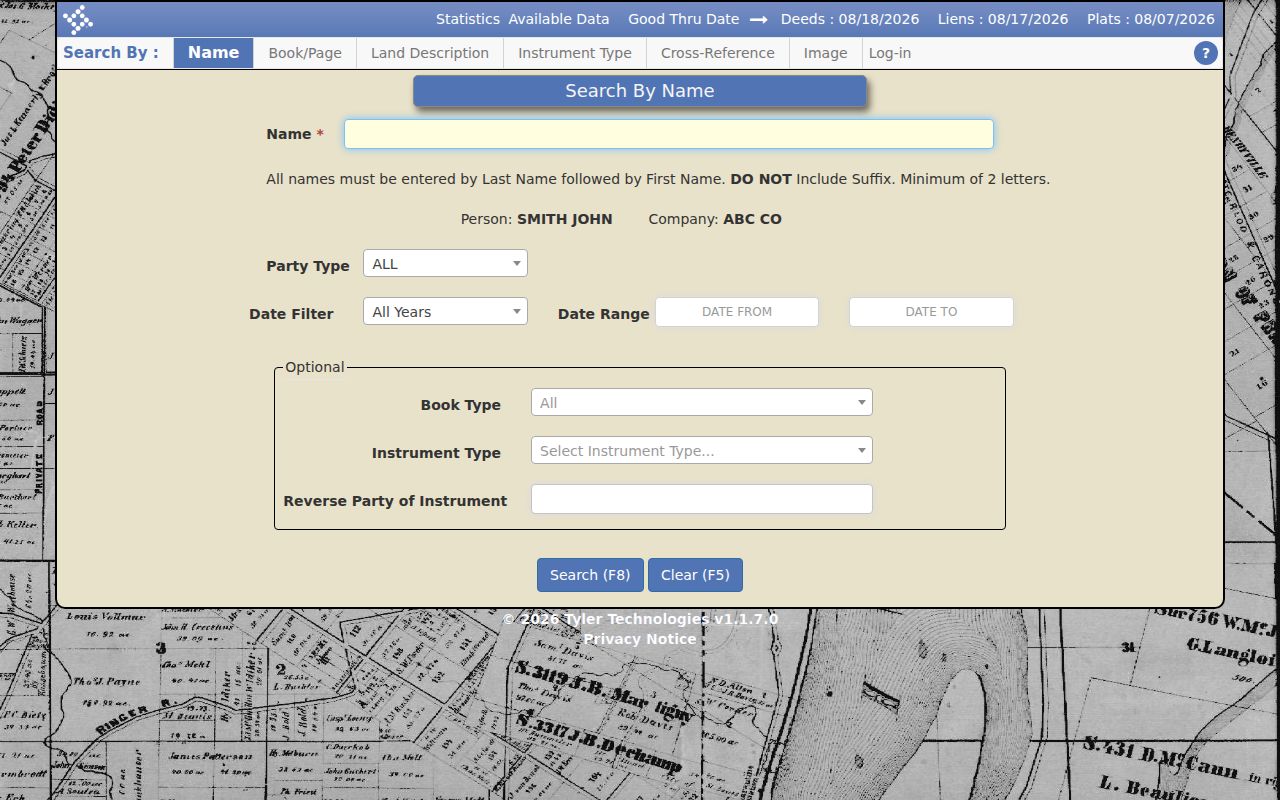
Use its party, date, book and instrument clues as identity checks, then read the linked image rather than trusting the index line.
Verify One Albany Resident
A careful Albany name search moves from a broad index to the office record itself. The aim is not to gather every possible hit. It is to test one identity. One person, one place, and one date must fit together. The goal is sometimes a whole road, not a single name. The Albany street directory follows that address-based route.
- Normalize the name. List middle initials, former surnames, suffixes and likely spelling forms before searching.
- Anchor the person to one place. Compare qPublic mailing and situs fields, or use MVP only with lawfully known identifiers.
- Check a second official index. A deed, court event, probate notice, license or corporation filing should add a date or role.
- Compare two independent attributes. Do not merge records just because the first and last names match.
- Ask the custodian for the file or certified copy when legal proof is needed. Note any sealing, eligibility or redaction limit.
- Docket
- The dated list of filings and events in a court case.
- Index versus image
- An index points to a record; the image contains the filed document and may have separate access rules.
- Certified copy
- A copy authenticated by the keeper for an official purpose.
- Situs address
- The physical location of land, distinct from the address used for tax mail.
Confirm Albany Court Records
Dougherty Superior and State Courts link to CMWebSearch. The current landing screen is account-based, though, and displays User Name, Password, and Forgot Password. The public page does not expose verified anonymous party fields, coverage dates, or result limits. Use the Superior Court Clerk's counter, telephone, or email when the system is inaccessible. The same applies when an older file is needed or when a certified copy matters. Municipal Court publishes no name portal; releasable city matters route through Albany JustFOIA.
A docket can list the case number and style, court, party roles, filing date, case type, judge, status or disposition, events, and document availability. Those are expected docket concepts, not a promise that every local screen shows every field. Sealed, juvenile, adoption, restricted, and other protected files remain unavailable. A filing or charge is not proof of guilt. A case address is not proof of where a person lives now.
State custody is a separate question. The official Georgia Department of Corrections query provides the appropriate state channel.
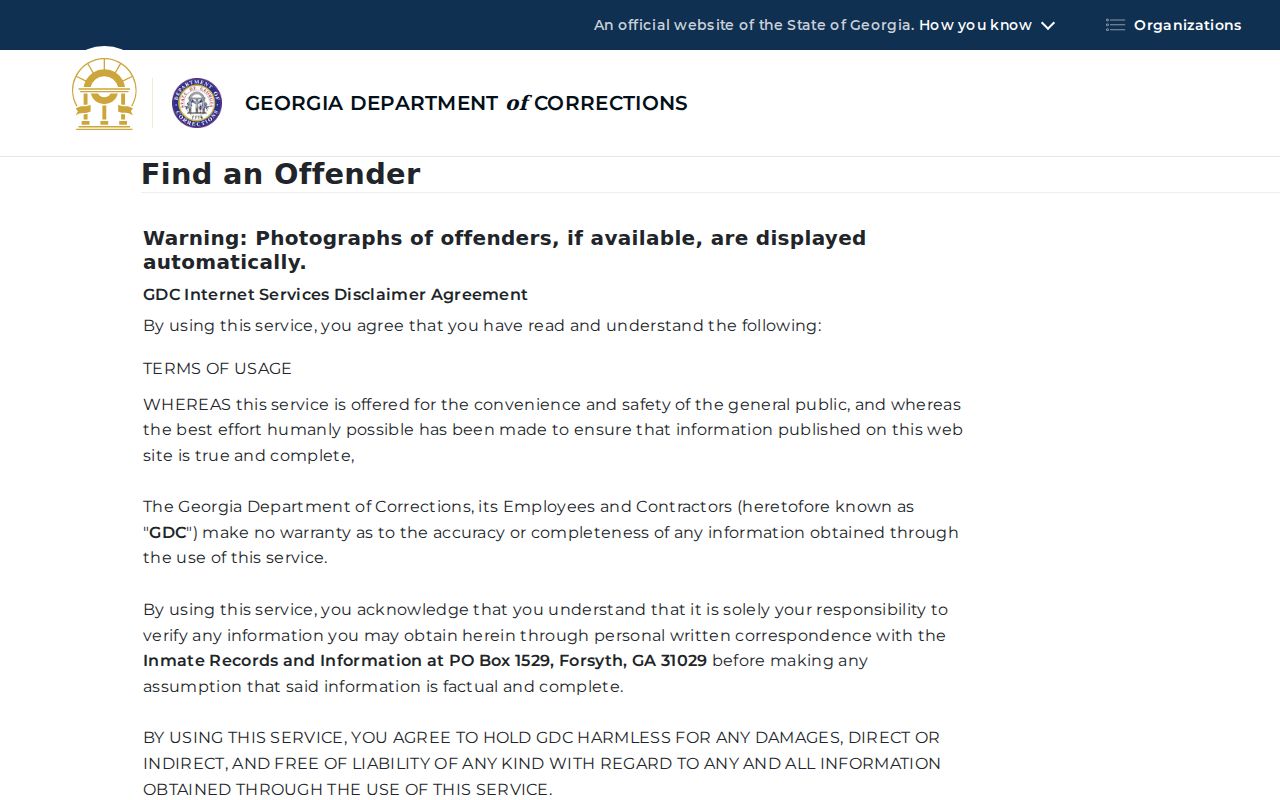
Verify any result with identifying numbers, dates, and the agency, since the state query does not cover every local arrest or establish an Albany home.
Albany Vital Record Limits
Georgia vital certificates do not form an open people index. Statewide birth and death records begin in January 1919. Dougherty Probate Court serves as a local counter. Birth certificates are limited to the registrant and other specified direct or tangible-interest requesters. A death record without cause may be more widely available, but certified or cause-of-death information carries tighter eligibility. An actual divorce decree comes from the Superior Court that granted it.
The base state fee is $25 for the first birth or death copy. Each added copy in the same order costs $5. ROVER adds an $8 processing fee, and optional FedEx costs $16 without speeding production. Mail is stated at eight to ten weeks. Online orders commonly take two to four weeks but may run up to ten. In-person same-day service may be possible. Fees are not refunded for a not-on-file search.
Myth check. No official Georgia source sets an automatic rule that births open at 100 years or deaths at 50. Historical indexes remain separate from current certified-copy law.
Check Albany Business Links
A business or professional index can separate two Albany names when you know an affiliation. Georgia's corporation search runs on several keys. Try Business Name with Starts With, Contains, or Exact, or search by Control Number, Registered Agent Name, Officer Name, or Designated Agent Name. Its tabs cover Business, Service of Process, and Trademark. Each hit describes an entity record. Keep in mind that a registered office or agent address is not always a residence, so weigh it accordingly.
| Lookup | Useful name fields | What to retain |
|---|---|---|
| Georgia eCorp | Officer, agent, designated agent, business | Control number, role, entity status and dates |
| License verification | Profession, license type, first/middle, last, license number | Credential number, profession and status |
The professional-license form permits a wildcard after a partial value. Pair any result with the correct board and credential number before trusting it. Albany publishes no verified public register of occupational-tax records, so ask for an identifiable existing city record rather than assuming a complete online list exists.
Reconnect Through Albany Archives
Different personal goals call for different paths. Hunting an heir? Start with a Dougherty Probate Court estate file and its published notice. Then compare executor, heir, and notice addresses for a match. For a former classmate, the Albany State University Archives holds institutional and yearbook material. Staff require an appointment plus 48 hours' notice. So name the school, series, year, and organization when you request retrieval.
South Georgia Archives at Thronateeska Heritage Center adds railroad, map, photograph, and civic holdings. The collection spans a reported 5,441 cubic feet. Hours are Thursday and Friday from 1 to 5. Ask for a finding aid rather than submitting only a personal name. From there, local newspapers and obituary holdings at Dougherty County Public Library can tie a name to kin. They may also connect a club, a church, or a dated event.
The South Georgia Archives page shows the local research institution behind this route.
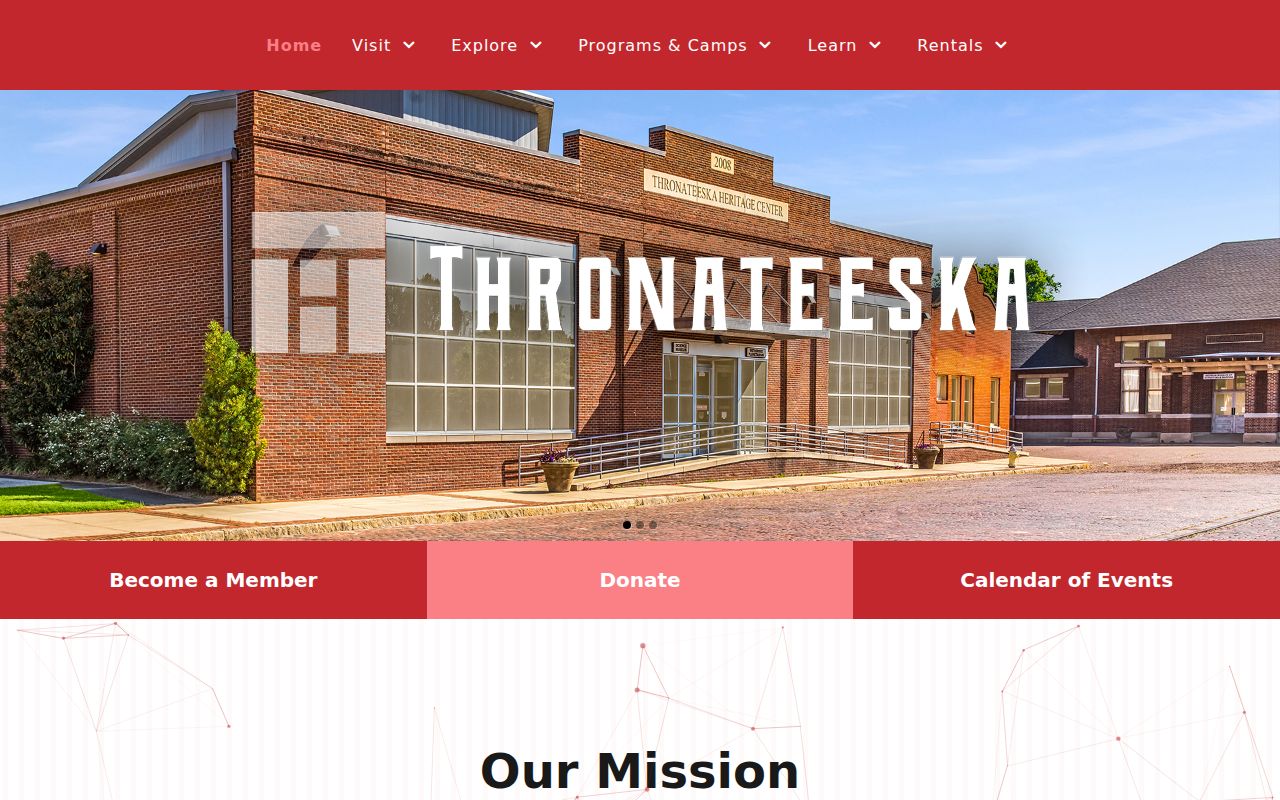
Albany's historical collections capture occupations, civic posts, and family ties that a modern residents directory leaves out.
Use Albany Special Indexes Carefully
An official special-purpose index answers only its assigned question. The Georgia offender registry serves a public safety role. The Department of Revenue's unclaimed-property route helps a person search for property the state holds. Neither is a citywide roll. Match names with dates, identifiers, and the issuing agency. Never infer an Albany residence from a lone result.
The official Georgia Bureau of Investigation registry includes its own legal notices and verification context.
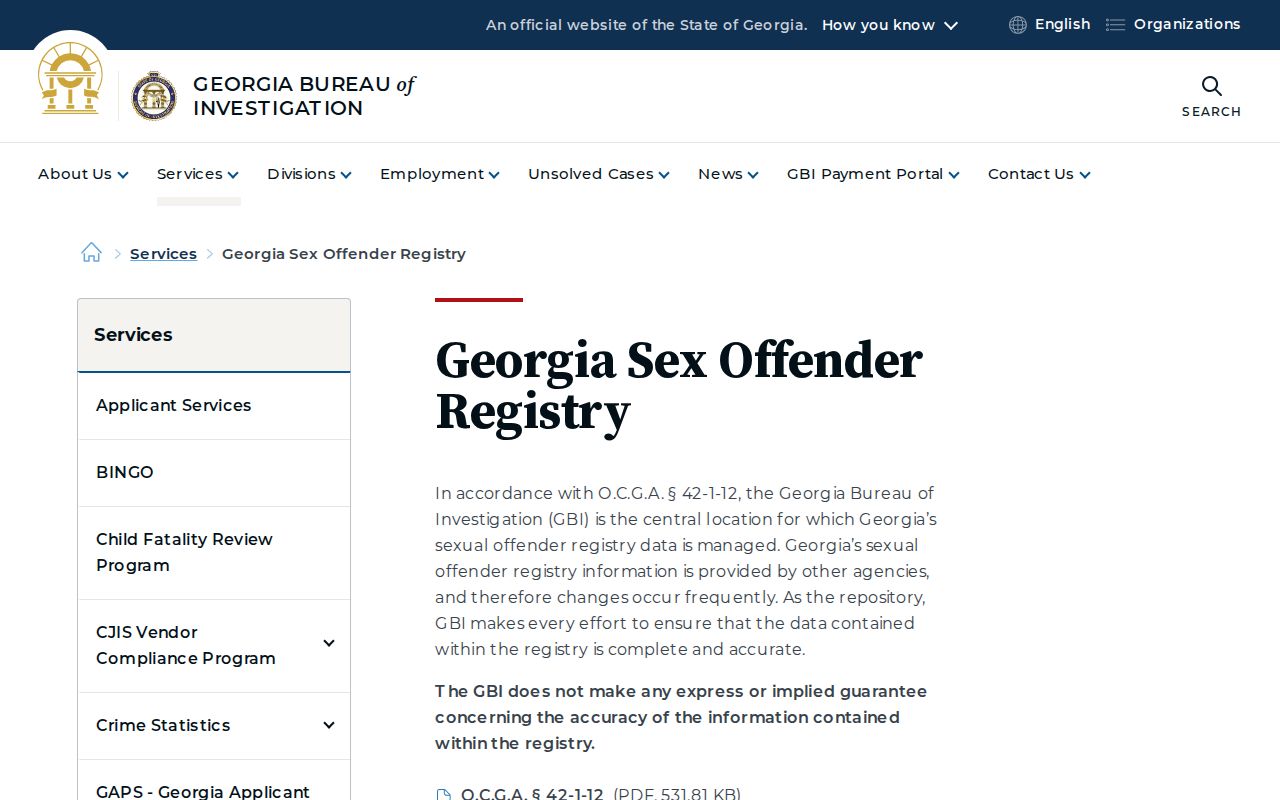
Treat the agency record as dated public-safety information. It is not a broad claim about identity, guilt, or a current household. For money held by the state, begin at the Georgia unclaimed-property program.
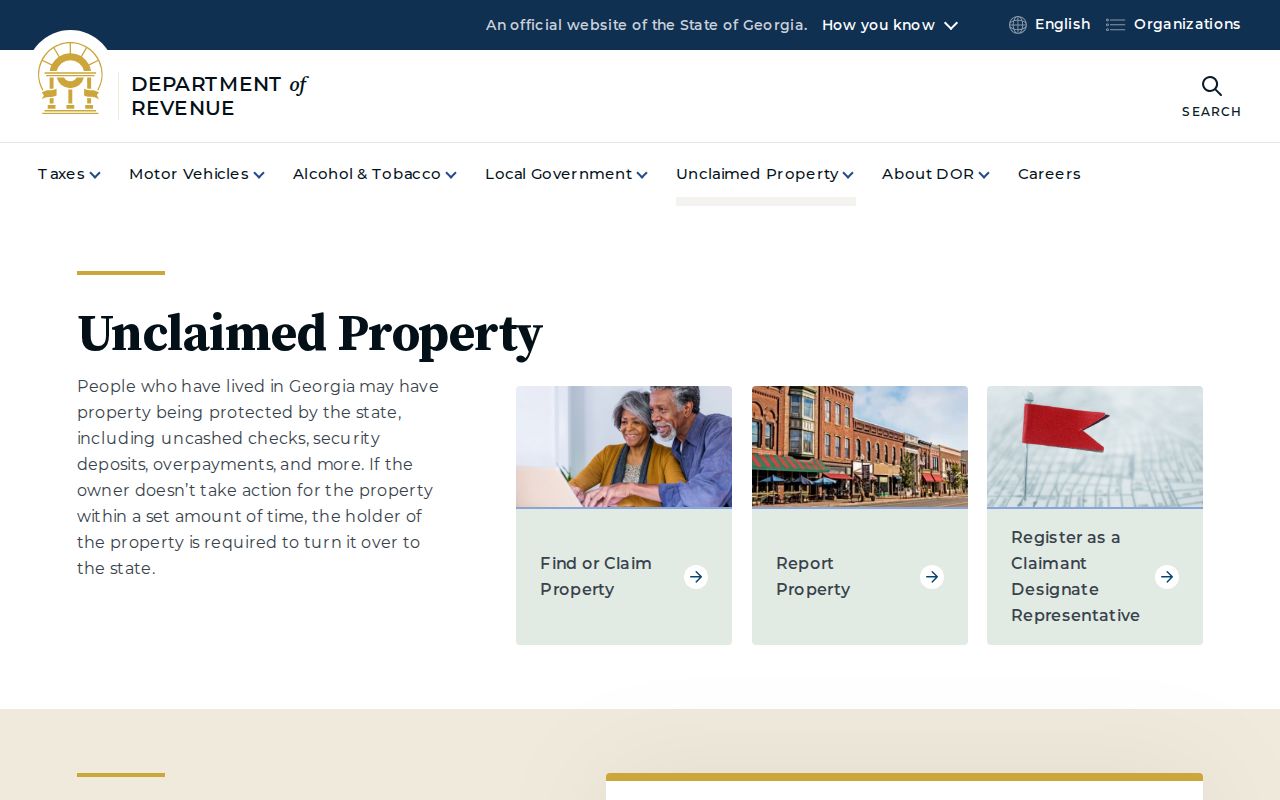
That path allows a simple name-based lookup. It points a claimant toward the state process instead of a private compilation.
Request Missing Albany Records
When no special portal applies, identify the keeper and ask for an existing record. Albany municipal material can be requested through JustFOIA. Give a name, date range, and record type. Add a case, citation, permit, or address number if known. The Georgia Open Records Act requires production within three business days. Otherwise the office must send a written response with a timetable, cost estimate, and precise exemption. The law does not force an office to create a new list.
Fees follow a formula. Search, retrieval, and redaction use the lowest-paid qualified worker, with the first fifteen minutes free. Ordinary copies generally cost up to ten cents per page. Other media go for actual cost. Court certification and judicial records follow the clerk's own process. Before paying for a broad search, ask Dougherty County offices by phone or email. Learn where a web index hands off to older books.
Note: A narrow request with name variants, dates, and record type reduces delay and helps the custodian find the right Albany file.
Protected Albany Resident Records
Some absences are deliberate. Georgia's Safe at Home program, created in 2024, gives eligible survivors a substitute address for state and local public records. It forwards mail and protects voter treatment. VoteSafe is a separate voter-focused protection for qualifying registered residents. Never try to reverse either shield. Federal law also restricts motor-vehicle personal data. Sealed or confidential court and vital files stay closed even when a name is known.
To correct a bad public entry, go to the office that made or keeps it. A careful Albany records check preserves the source date and distinguishes an index from its document. It also states uncertainty when two identities cannot be separated. Commercial compilations may be stale or merge people together. They do not replace the custodian's copy.
Lawful personal use. Use resident records for legitimate research. Georgia law prohibits stalking, aggravated stalking, harassing communications, identity fraud, and misuse of protected voter data.