
The Albany City Directory Shelf in Print and Online
Dougherty County Public Library supplied scanned Albany volumes to the Digital Library of Georgia. The collection summary says 1922 through 1949, but item-level records extend from at least 1907 through 1964. Treat each listed book as a snapshot. Do not assume that every year exists between the endpoints.
| Collection | Years represented | Where held | Access |
|---|---|---|---|
| Albany city directories | Item records from at least 1907 to 1964 | DLG and Dougherty County Public Library | Free scans; verify browse list |
| Local newspapers | Microfilm from 1845 forward | Central Library | In library; ask about gaps |
| Federal and Georgia censuses | Georgia 1820 to 1930; federal holdings through public 1950 census | Library and genealogy databases | Library and database access |
| Obituaries and death registers | Collection-specific | Central Library and DLG description | Staff, index, or database route varies |
| Sanborn maps | Albany editions include 1920 | DLG and Library of Congress | Free digital sheets where allowed |
The browse record, not the short landing summary, controls what is available. Exact title pages also control publisher attribution. Missing years may be absent from the digital set even if a physical copy survives elsewhere.
Albany Publishers Mark a Changing Directory Era
The known run begins with the 1907 Albany city directory, Volume I. R. L. Polk appears in 1922 and 1925. Miller's 1928-29 Volume III belongs to the Southern or Piedmont series, followed by Piedmont Directory Company's 1930-31 Volume IV. Southern Directory Company and A. L. Seely appear in 1934-35, with later Miller's volumes through the early 1950s. Polk returns in the known 1964 item.
1907: earliest item verified in the digitized set.
1922 and 1925: Polk volumes.
1928-31: Miller's and Piedmont volumes.
1934 onward: Southern and A. L. Seely-era titles.
1964: a 1,141-page Polk volume.
This timeline shows publisher shifts, not every printing and not the first directory ever issued. The research did not supply a full publisher-by-year transcription, so cite the title page of the volume actually used.
What Albany Volumes Added to the Shelf
Volume structure changed with the city. The 1922 title promises alphabetical firms and private citizens, public bodies and institutions, churches and courts, a street and avenue guide, and a classified buyers' guide. The 1928-29 edition expressly adds a street and householder directory. By 1937-38, the book includes a numerical telephone directory.
The 1939 scope names residents age fourteen and older and fringe places such as Avalon, Cherokee Heights, Dawson Road, East Albany, Radium Springs Road, and Flint River Cotton Mill Village. The 1964 volume adds Darr Homes, Radium Springs, and Turner City. These subtitles tell researchers what the publisher meant to cover. They do not prove each named place was legally within Albany.
Decode an Entry in an Albany City Directory
The inspected 1922 volume lists surname, given name or initials, spouse or widow notation when used, work shorthand, and residential address. Business entries and advertisements appear as well, and street sections can reorder people by address. Keep the original spelling, initials, and abbreviations until the evidence is checked elsewhere.
| Name | Surname plus given name or initials; courtesy titles may occur |
|---|---|
| Spouse or widow | A spouse in parentheses or wid with a deceased spouse's initials |
| Work clue | Occupation, employer, business tie, or an abbreviation such as emp |
| Home | h followed by house number and street; h same may point to the work site |
| Telephone | Appears in some later entries, including a 1937-38 example |
- Criss-cross section
- A street and house-number arrangement used to reverse an address to a listed householder.
- Householder index
- A street-order list that complements the main alphabetical name list.
- Abbreviation key
- The volume's guide to compact marks such as
h,emp,clk, andwid.
Photograph or save the key with the entry. A mark can change meaning across publishers, and expanding it from memory can alter what the original line says.
Read Albany's Discriminatory Marks with Care
Some 1934-38 publishers marked or segregated Black entries with an asterisk. That convention reflects discrimination in the source and should be explained rather than repeated without context. At the same time, the mark may help recover Black residents left out of other records. Preserve the evidence in a research note while using respectful present-day language in the family narrative.
This matters greatly in Albany. Historical poll-book evidence shows more than 2,400 Black men registered locally in 1867-68, compared with 28 by 1915. Later voter-registration history includes the Albany Movement of 1961-62. A directory's inclusions, exclusions, and labels are part of the record's history, not neutral facts about the people named.
Search Albany Scans Past OCR Errors
DLG warns that full text may be machine generated and uncorrected. Search surname variants, initials, spouse names, employer, address, and fragments of a word. Then inspect the page image. A clean-looking search result can still omit a faint line or split a name across columns.
Variant searching is a broad Albany records habit. The local deed system also tells users to try plausible spellings. In directory work, search women under married, maiden, and widow forms, and search firms under both proprietor and trade name. When the name remains hidden, use the street section to reverse the address.
Central Library Extends Albany City Directory Research
Central Library at 300 Pine Avenue is the principal local-history access point; its main number is (229) 420-3270. Its described holdings include county histories, censuses, death registers, deeds, church records, Albany and Southwest Georgia obituaries, family histories, cemetery and DAR material, military sources, and newspaper microfilm from 1845 onward.
Ask staff about exact title and year gaps before a visit, and identify a surname, address, and bounded date span. A directory disappearance alone cannot distinguish death, relocation, omission, or changed spelling. Obituaries, death registers, cemetery records, deeds, and news notices provide the next tests. Riverside and Oakview cemetery staff have burial records but no published online interment index.
Albany State Archives Adds a Second Local Door
The James Pendergrast Memorial Library at Albany State University serves as the archival gateway for Southwest Georgia history and campus memory. The South Georgia Archives holds 5,441 cubic feet of material. Researchers should contact staff before arriving because retrieval requires 48 hours' notice.
The official Albany State library services page introduces this research channel.
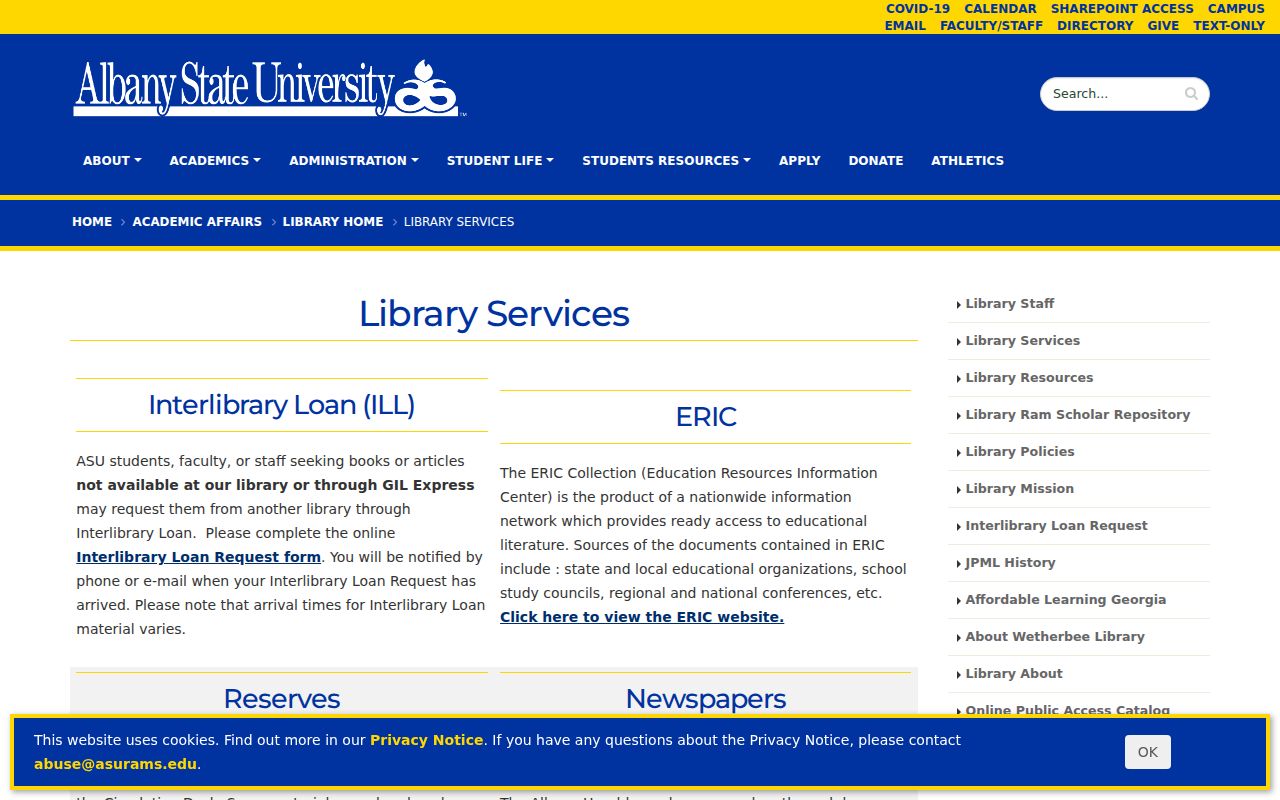
This is a companion archive, not a substitute claim that every city directory year is held there. Ask a narrow collection question and verify the item, date, and access terms with archives staff.
Pair Albany Directories with Newspapers and Maps
Georgia Historic Newspapers includes named Albany titles from the nineteenth and early twentieth centuries. Search a person by exact phrase and variant, then try address, spouse, firm, and club. An announcement, advertisement, marriage notice, or obituary can explain a city-directory change.
Maps solve a different problem. The Library of Congress has an exact seven-sheet April 1890 Albany Sanborn set, and Albany editions include 1920. Use the sheet index, street label, building outline, and construction details to place an old address. If the number changed, anchor the location through plat, legal description, nearby landmark, and street guide.
Trace a Family Through Albany City Directories
A family trail should move across years and record types. The city directories supply dates between federal census snapshots, while census, news, death, cemetery, probate, and map sources test why a name or address changed.
- Find the surname alphabetically and copy the entry exactly, including initials, spouse, work marks, and address.
- Check the street or householder section to confirm the address and nearby listed names.
- Repeat in the closest earlier and later volumes; mark real gaps instead of assuming annual coverage.
- Pair directories around 1930, 1940, and 1950 with the public federal census household for those years.
- Use obituary, death-register, cemetery, probate, newspaper, or map evidence to explain disappearance or movement.
One changed detail can separate people with the same name. A spouse, firm, initials, occupation, or steady address may provide the second anchor. If the search turns toward present address-keyed property and deed files, use the Albany street directory workflow rather than treating a historic entry as current.